The Role of Deep Breathing in Today’s Lifestyle
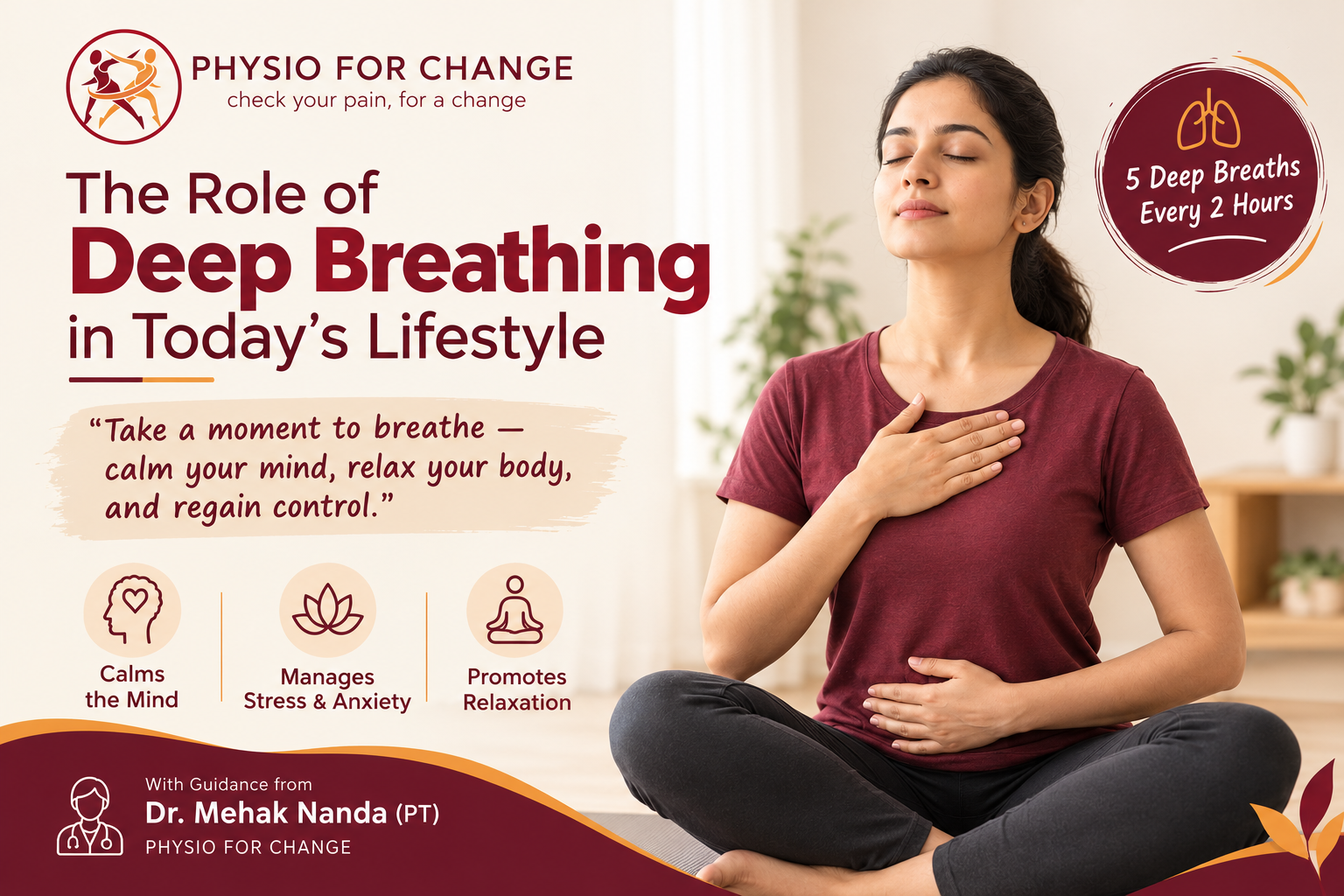
The Role of Deep Breathing in Today’s Lifestyle: Calm Your Mind and Manage Stress
The Role of Deep Breathing in Today’s Lifestyle: Calm Your Mind, Manage Anxiety and Improve Well-Being
By Dr. Mehak Nanda | Physio For Change
Introduction
In today's fast-paced world, stress, anxiety, overthinking, long working hours, and excessive screen time have become common parts of everyday life. Our minds are constantly occupied with deadlines, responsibilities, personal challenges, and the pressure to keep up with our daily routines. In the middle of all this, we often forget to take care of one of the most basic functions of our body: breathing.
Breathing is something we do naturally, without even thinking about it. However, paying attention to the way we breathe can help us become more aware of our physical and mental state.
Deep breathing is a simple yet effective relaxation technique that may help calm the mind, reduce feelings of stress, manage anxious responses, and promote a sense of well-being. The best part is that it does not require special equipment, a gym membership, or a significant amount of time.
At Physio For Change, we believe that small, consistent lifestyle habits can make a meaningful difference in how we feel and function every day. Deep breathing is one such habit that you can easily incorporate into your daily routine.
What Is Deep Breathing?
Deep breathing, also known as diaphragmatic breathing or belly breathing, is a technique that involves breathing slowly and comfortably while allowing the diaphragm to work efficiently.
The diaphragm is the primary muscle responsible for breathing. During relaxed diaphragmatic breathing, the abdomen expands gently as you inhale and returns towards its resting position as you exhale.
Unlike rapid or shallow breathing, controlled breathing encourages you to pay attention to your breathing rhythm and relax unnecessary tension in your body.
Deep breathing can be practised while sitting, standing, or lying down. With regular practice, it may become a useful tool for managing everyday stress and improving awareness of your breathing patterns.
Why Is Deep Breathing Important in Today's Lifestyle?
1. Helps Calm the Mind
Our minds are often occupied with multiple thoughts, responsibilities, and worries. Constant mental stimulation can make it difficult to relax, even when we have time to rest.
Deep breathing provides an opportunity to pause and redirect our attention towards the present moment. Focusing on a slow, comfortable breathing rhythm may help reduce feelings of mental overwhelm and encourage a calmer state of mind.
Even a short breathing break during a busy day can give you a moment to slow down and reconnect with yourself.
2. Helps Manage Anxiety and Stress
Stressful situations can sometimes cause us to breathe more rapidly or feel physically tense. We may experience racing thoughts, restlessness, or difficulty concentrating.
Slow, controlled breathing can support the body's relaxation response and may help some people manage feelings of anxiety and tension.
Practising deep breathing regularly can also help you become more aware of your emotional responses. Instead of reacting immediately to a stressful situation, you can take a brief pause, focus on your breathing, and approach the situation more calmly.
Deep breathing is not a cure for anxiety disorders, but it can be a useful complementary technique for everyday stress management.
3. Supports Better Sleep and Relaxation
Many people struggle to relax at night because their minds remain occupied with work, responsibilities, or worries about the following day.
Including deep breathing in your bedtime routine may help you unwind and prepare for sleep. When combined with a consistent sleep schedule, reduced screen time before bed, and a comfortable sleeping environment, it can become part of a healthy nighttime routine.
4. Improves Awareness of Posture and Breathing
Spending long hours sitting at a desk, using a laptop, or looking down at a mobile phone can encourage poor posture and muscle tension.
In some people, these habits may also be accompanied by shallow breathing or excessive movement around the upper chest and shoulders.
Practising diaphragmatic breathing in a comfortable position can help you become more aware of your rib cage, abdominal movement, and breathing coordination.
However, breathing exercises alone cannot correct every postural problem. Appropriate stretching, strengthening, movement breaks, and physiotherapy may also be necessary.
5. Encourages Mindfulness and Better Focus
Deep breathing allows you to take a break from constant notifications, multitasking, and mental distractions.
By focusing on each inhalation and exhalation, you can practise mindfulness and develop greater awareness of the present moment.
This brief pause may help you return to your work or daily responsibilities feeling more settled and focused.
6. Supports Breathing Awareness During Physical Activity
Breathing plays an essential role in movement, exercise, and physical rehabilitation.
Learning to breathe in a relaxed and coordinated manner may help improve awareness of breathing during physical activity. Physiotherapists may incorporate breathing exercises into rehabilitation programmes depending on an individual's needs and health condition.
People experiencing persistent breathlessness or those with respiratory conditions should seek professional guidance to determine which breathing techniques are appropriate for them.
Dr. Mehak Nanda's Recommended Deep Breathing Routine
According to Dr. Mehak Nanda of Physio For Change, taking short, regular breathing breaks can be a practical way to introduce mindful breathing into your daily lifestyle.
Rather than waiting until you feel overwhelmed or stressed, try making deep breathing a regular part of your routine.
The 5–5 Deep Breathing Technique
Follow this simple routine:
-
Frequency: Once every 2 hours during your waking day.
-
Repetitions: 5 breathing cycles per session.
-
Inhale: Gently breathe in for 5 seconds.
-
Exhale: Slowly breathe out for 5 seconds.
-
Total duration: Approximately 50 seconds per session.
How to Practise It Correctly
Step 1: Sit comfortably
Sit on a chair with your feet resting on the floor. Keep your back comfortably supported and relax your shoulders.
Step 2: Inhale for 5 seconds
Breathe in gently through your nose, if comfortable. Allow your abdomen to expand naturally without lifting your shoulders excessively.
Step 3: Exhale for 5 seconds
Release the breath slowly and comfortably. Avoid pushing the air out forcefully or creating unnecessary tension.
Step 4: Repeat 5 times
Continue with five comfortable breathing cycles, keeping the rhythm smooth and relaxed.
Step 5: Return to normal breathing
After completing the five cycles, breathe naturally and continue with your daily activities.
The goal is not to take the biggest breath possible. Instead, focus on breathing gently, steadily, and without strain.
If a five-second inhalation or exhalation feels uncomfortable, shorten the count and follow a natural, comfortable rhythm. Stop if you experience dizziness or worsening breathlessness.
When Should You Practise Deep Breathing?
One of the biggest advantages of deep breathing is that it can be practised almost anywhere.
-
In the morning: Begin your day with a short moment of mindful breathing.
-
During working hours: Take a breathing break after long periods of sitting or screen use.
-
After a stressful situation: Give yourself a moment to pause and relax.
-
During study breaks: Use breathing to step away from mental pressure and return with a fresh perspective.
-
Before bedtime: Include comfortable breathing in your nighttime relaxation routine.
Following Dr. Mehak Nanda's suggested routine of five breathing cycles every two hours can help you build consistency. You can set a reminder on your phone if you tend to forget during a busy day.
Common Mistakes to Avoid While Practising Deep Breathing
Although deep breathing is simple, practising it incorrectly may cause discomfort.
1. Taking excessively deep breaths: Deep breathing should be gentle, not forced.
2. Breathing too quickly: Avoid rapid, repeated inhalations. Focus on a comfortable and controlled rhythm.
3. Raising the shoulders: Try to keep your neck and shoulders relaxed while allowing your abdomen to move naturally.
4. Holding your breath unnecessarily: Basic diaphragmatic breathing does not require you to hold your breath between inhalation and exhalation.
5. Expecting immediate results: Everyone responds differently. Use breathing as a regular relaxation practice rather than expecting it to eliminate all stress or anxiety.
6. Ignoring unusual symptoms: Stop if you feel dizzy, experience chest discomfort, or notice worsening breathlessness. Seek appropriate medical advice when necessary.
The Role of Physiotherapy in Breathing Exercises
Physiotherapy focuses on improving movement, function, and physical well-being. Depending on the patient's condition and the physiotherapist's expertise, breathing exercises may also form part of a rehabilitation programme.
A qualified physiotherapist can assess breathing patterns, posture, movement, and individual limitations to determine whether specific exercises are suitable.
Breathing techniques may be used in selected cases to support breathing coordination, relaxation, and rehabilitation. The appropriate approach depends on the person's health history, symptoms, and treatment goals.
At Physio For Change, the focus is on understanding individual needs and encouraging healthy, sustainable habits that support better physical function and overall well-being.
If you experience persistent anxiety, sleep difficulties, or breathing problems, remember that deep breathing is a supportive technique, not a replacement for appropriate medical or mental health care.
Conclusion: Make Deep Breathing a Part of Your Daily Life
In today's busy lifestyle, we often focus on completing our responsibilities while neglecting the importance of taking a moment for ourselves.
Deep breathing offers a simple way to slow down, calm the mind, become more aware of our bodies, and manage everyday stress. With regular practice, it may help you develop a healthier relationship with your breathing and create small moments of relaxation throughout the day.
You do not need to wait until you feel stressed to start. Begin with five comfortable breathing cycles, practise regularly, and gradually make mindful breathing part of your everyday routine.
Remember, a healthier lifestyle is not always about making big changes. Sometimes, it begins with taking a moment to breathe.
Breathe mindfully. Stay calm. Move better. Live healthier.
Expert Advice
Dr. Mehak Nanda
Physio For Change
For professional guidance on physiotherapy, posture, movement, and personalised rehabilitation, consult the team at Physio For Change.
Disclaimer: This article is intended for general educational purposes and is not a substitute for individual medical advice, diagnosis, or treatment.