How to Fix Forward Head Posture: Expert Tips from Physio For Change, Janakpuri
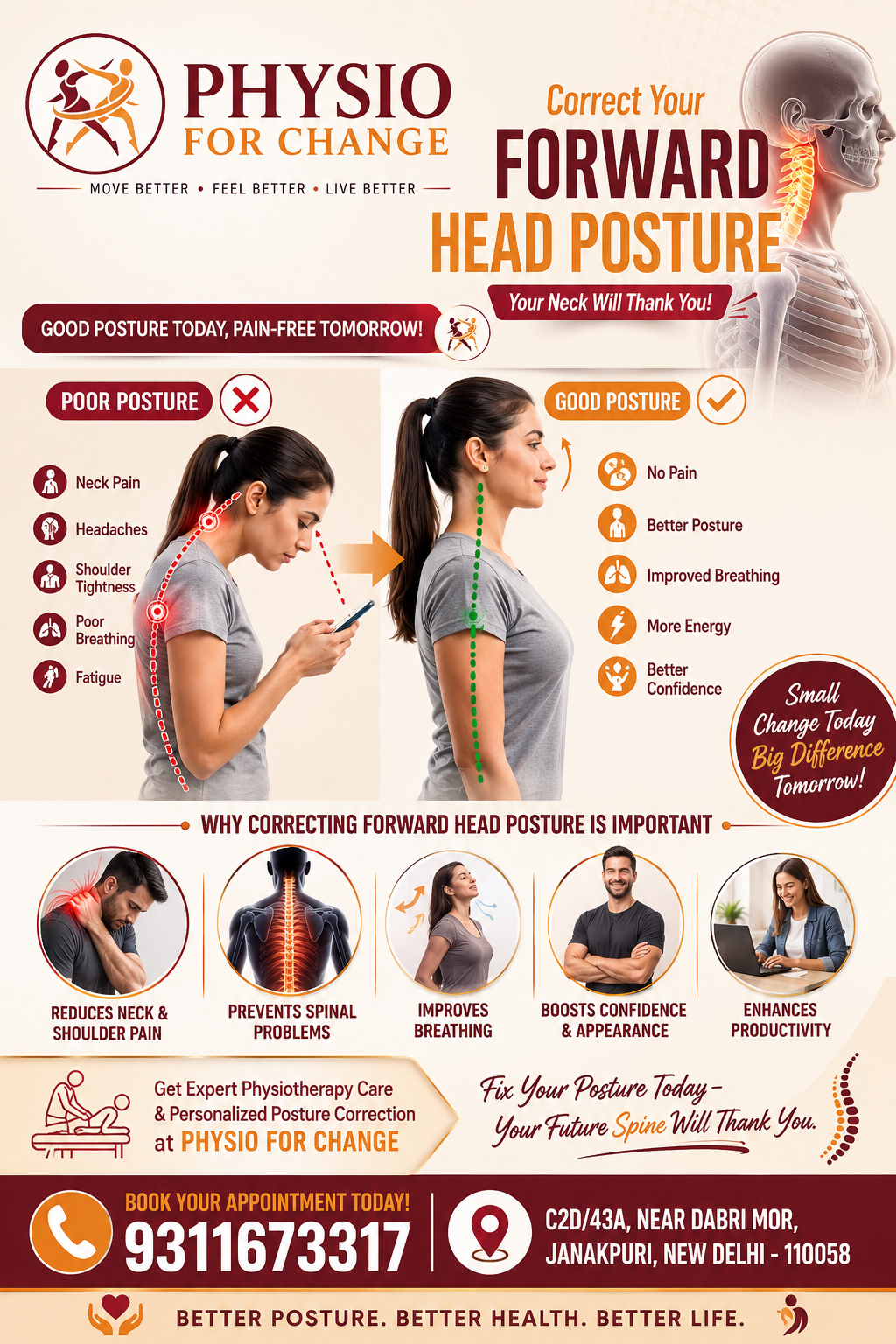
Correct Your Forward Head Posture & Why It Matters
Introduction
In today’s digital world, forward head posture (FHP) has become increasingly common. Whether you're working on a laptop, scrolling on your phone, or driving for long hours, your head slowly drifts forward, placing excessive strain on your neck and spine.
At PHYSIO FOR CHANGE, we frequently treat patients suffering from pain and dysfunction caused by poor posture — and forward head posture is one of the biggest culprits.
What is Forward Head Posture?
Forward Head Posture occurs when your head is positioned in front of your shoulders instead of being aligned with your spine. For every inch your head moves forward, the pressure on your neck muscles significantly increases.
This leads to muscle imbalances, strain, and long-term damage if left untreated.
Why Correcting Forward Head Posture is Important
1. Reduces Neck and Shoulder Pain
FHP puts constant stress on your cervical spine, leading to chronic pain, stiffness, and tension headaches.
2. Prevents Spinal Degeneration
Over time, poor posture can accelerate wear and tear in your spine, increasing the risk of conditions like cervical spondylosis.
3. Improves Breathing
A forward head compresses your chest, limiting lung expansion. Correct posture helps you breathe better and improves oxygen flow.
4. Boosts Confidence & Appearance
Standing upright not only improves your physical health but also enhances your confidence and body language.
5. Enhances Productivity
Less pain = better focus. Correct posture helps you stay comfortable and productive throughout the day.
Common Causes of Forward Head Posture
- Prolonged mobile phone usage (“text neck”)
- Poor workstation ergonomics
- Sedentary lifestyle
- Weak neck and upper back muscles
- Lack of postural awareness
How to Correct Forward Head Posture
1. Chin Tucks (Simple & Effective)
Gently pull your chin backward, keeping your eyes level. Hold for 5 seconds and repeat 10–15 times.
2. Strengthen Upper Back Muscles
Exercises like rows and scapular retractions help restore balance.
3. Stretch Tight Muscles
Focus on stretching chest muscles and the front of your neck.
4. Improve Workstation Ergonomics
- Screen at eye level
- Back supported
- Feet flat on the floor
5. Take Frequent Breaks
Avoid sitting for long periods. Move every 30–45 minutes.
When Should You See a Physiotherapist?
If you experience:
- Persistent neck or shoulder pain
- Frequent headaches
- Reduced mobility
- Tingling or numbness
…it’s time to consult a professional.
At PHYSIO FOR CHANGE, we provide personalized posture correction programs, manual therapy, and targeted exercises to help you recover and prevent future issues.
Final Thoughts
Forward head posture may seem harmless at first, but over time it can lead to serious health issues. The good news? It is completely correctable with the right guidance and consistency.
Take the first step today — your posture defines your health.